
I remember the rain slicking the pavement outside a small plumbing shop in a quiet industrial district. The smell of wet concrete was heavy as I adjusted my camera lens to capture the storefront signage. This plumber was a ghost in the machine. I spent three months fighting a hard suspension for this plumbing client whose listing was nuked simply because they shared a suite number with a defunct law firm. Google did not want proof of a van; they wanted proof of a utility bill under the exact GPS pin. That experience taught me that the local algorithm is not a marketing tool; it is a spatial database that punishes any lack of physical clarity. When you go to buy a ranking tool, you are looking for a lens that can see these microscopic glitches before they become terminal issues.
The ghost in the GPS coordinates
A professional local search tool must pinpoint GPS coordinate salience, CID numbers, and PID identifiers to navigate the Map Pack ecosystem. Real ranking power relies on tracking centroid shifts and proximity radius changes. Users often need technical seo services to fix indexing and crawling issues when their physical location data does not align with their digital footprint. Tools must detect duplicate filters and local justification triggers.
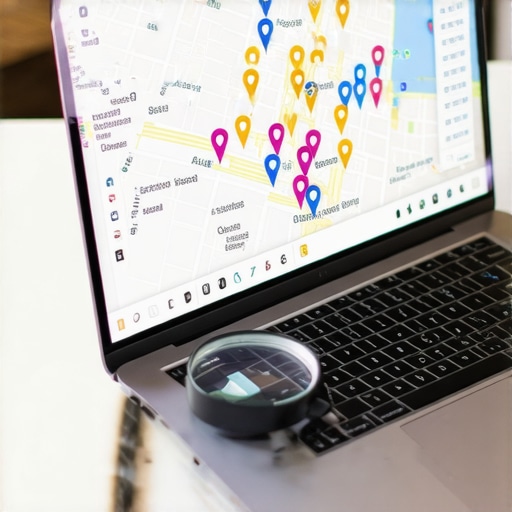
The data behind a map pin is deeper than a simple address. Every listing has a unique CID number that acts as its fingerprint in the Google database. If your tool only tracks keyword positions, it is missing the forensic reality of how Google views your shop. When I photograph a storefront, I look for the reflection in the window to see what else is on the street. A good tool does the same. It looks at the proximity of competitors and how the three mile radius fluctuates at different times of the day. You might find that the 3 tools that actually show where your map pin is visible are the ones that account for this spatial zooming logic. If the tool cannot tell you if your pin is being filtered because of a nearby competitor in the same category, it is useless. You are flying blind in a storm of data points.
Why your physical address is a liability
Physical addresses become liabilities when shared with defunct entities or located in virtual office buildings with high spam scores. Google uses spatial forensic analysis to identify keyword stuffed business names. Businesses require local seo services to normalize rankings after keyword stuffed business name edit to regain trust. Clean NAP consistency and citation cleanup services for local businesses are the primary defenses against deranking.
The physical location is the anchor that holds your entire digital existence in place. When that anchor drags, your rankings sink. I have seen businesses lose everything because they used a PO Box or a virtual suite that had been flagged for spam by a previous tenant. It is like trying to take a clear photo through a dirty window. The algorithm sees the smudge and assumes the whole image is fake. This is why why you shouldnt use a po box for your local business profile is such a common piece of advice for those starting out. Any tool you buy must have a module for fixing the spam problems that keep your shop off the map. It should flag if your address is associated with known spam clusters or if your category choice is putting you in a crowded filter where only one business can survive the zoom level.
“Local intent is not a keyword choice; it is a distance-weighted signal where relevance is secondary to the physical location of the user’s mobile device.” – Map Search Fundamental
The three mile radius that determines your revenue
The three mile radius around a business serves as the primary battleground for visibility and lead generation. Local search dominance depends on proximity signals and user behavioral patterns. A step by step gmb ranking toolkit for beginners should focus on map pack recovery moves. Success is measured by turning profile clicks into real phone calls and fixing deranked websites through seo audit and penalty recovery services.
In the world of local search, distance is the ultimate gatekeeper. If a customer is five miles away, and your competitor is two miles away, the algorithm will almost always favor the closer option regardless of your review count. This is the proximity gap. You need to know exactly where your visibility drops off. Is it at the city line? Is it at the river? A quality tool maps your rankings on a grid, showing you the exact point where you disappear from the top three. This is how you identify if you need how to fix the proximity gap after moving your office across town or if you can expand your reach through localized content. The goal is to move the needle by inches, not miles. Small, incremental changes to your profile can force the algorithm to extend your reach by another few blocks. If your toolkit does not offer this level of granular detail, you are just guessing. Check out a map pack toolkit that does not require an seo degree to find something that focuses on these real world signals.
Local Authority Reading List
- The honest guide to buying a gmb ranking toolkit that works
- How to identify the content issues slowing down your maps traffic
- The step by step optimization move for listings stuck just outside the map pack
- The precise move to fix hidden keyword stuffing penalties
- The hidden signals that make google trust your physical location
Forensic patterns in local review sentiment
Review sentiment analysis involves tracking the mathematical weight of customer feedback and the geographic origin of the reviewer. Google uses AI pattern recognition to detect fake review attacks and spammy lead gen listings. Effective seo services to rebuild trust after spammy lead gen listings include reputation management tactics and a guide to review repair services for local service pros.
Reviews are more than just stars; they are linguistic data points. The algorithm looks for specific keywords within the text of the review to justify showing your business for a long tail search. If someone says you have the best copper piping repair in the city, that is a local justification. It is a signal of trust that carries more weight than your own website copy. However, the origin of that review matters. A review from a user who has never visited your city is a red flag. I once worked on a case where a cafe was hit by twenty 1 star reviews in an hour. We had to perform a forensic audit to show Google the patterns. They were all coming from the same VPN subnet. This is why you must understand how to neutralize fake reviews and reclaim your local reputation before you start a growth campaign. A tool that does not monitor for sudden negative trends is leaving you vulnerable to sabotage.
“The proximity of the user to the business is the single most influential factor in the local search algorithm, outweighing even traditional authority metrics in high-density markets.” – Vicinity Update Research
The math of local justification triggers
Local justifications are snippets of content from reviews or websites that Google uses to prove a business matches a specific search intent. Winning these triggers requires grounded content strategies and technical seo services. Businesses must focus on why your google business profile isnt showing up in the local three and use the category audit finding where your gmb profile is failing.
When you search for a service and see a small text snippet that says “Their website mentions…” or “A reviewer said…”, you are seeing a justification. These are the gold medals of the Map Pack. They tell the user exactly why you are the right choice. To get these, your content must be hyperspecific. You cannot just say you are a plumber. You must mention every suburb you serve and every specific tool you use. This is where why your local seo strategy needs a content audit right now becomes a factor. If your website is generic, your map listing will be generic. The engine needs data to connect the dots. I look at this like focusing a camera. If the background is blurry, the subject does not pop. Your website is the background; the map profile is the subject. They must both be in sharp focus to trigger the right signals. Tools should help you find the gap between what you offer and what Google thinks you offer.
Mismatched data and the death of trust
Mismatched business names, addresses, and phone numbers lead to an immediate loss of algorithmic trust and ranking positions. Google requires verified NAP data across all citation sources to maintain local search authority. Identifying services to fix mismatched business address and phone number issues is vital for seo services to fix deranked website issues and recovering from a sudden drop in google business profile calls.
Trust is the hardest thing to build and the easiest thing to break. If your Facebook page has one phone number and your Google profile has another, the algorithm gets confused. Confusion leads to deranking. It is a defensive mechanism. Google does not want to send a user to a business with a dead phone number. It makes the search engine look bad. This is why services to fix mismatched business address and phone number are so in demand. You might find that the move that fixes map rankings after a negative seo attack often starts with a full citation audit. You have to scrub the internet of every old address and every wrong digit. It is tedious work, like cleaning a camera sensor after a desert shoot. One speck of dust can ruin every photo you take. Your business data is the same. Every wrong listing is a speck of dust on your reputation.
The truth about multi location management
Managing multiple locations requires a local seo toolkit for multi location businesses that can handle cross-profile data without causing duplicate listing errors. Scaling requires the only map tracker that handles multi-location data correctly and the toolkit we use to manage map visibility for multi-location brands. Errors often result in fixing the filtered status for businesses in crowded buildings.
When you have ten or twenty locations, the complexity does not just add up; it multiplies. You have ten different sets of reviews, ten different proximity circles, and ten different sets of local competitors. You cannot manage this with a spreadsheet. You need a dedicated local seo toolkit for multi location businesses. Each location must have its own unique identity while still being part of the brand. This is a delicate balance. If you make them too similar, Google might filter them as duplicates. If you make them too different, you lose the power of your brand authority. I have seen companies accidentally kill their own rankings by using the same landing page for every office. This is why the city page strategy that finally gets local service areas to rank is so vital for growth. You need unique content for every pin on the map. Without it, you are just a generic chain, and the algorithm prefers the authentic local shop every time.