
Why Your Service Area Listing Is Underperforming on Maps
I spent three months fighting a hard suspension for a plumbing client whose listing was nuked simply because they shared a suite number with a defunct law firm. Google didn’t want proof of a van; they wanted proof of a utility bill under the exact GPS pin. This is the reality of the hyper-local layer. The smell of wet concrete and the hum of a dispatch radio define the life of a service area business, yet many owners find themselves invisible. You can have the best technicians in the city but remain a ghost in the machine because your proximity beacon is weak. Local SEO is not about keywords. It is about spatial database dominance. When your listing fails to show up, it is rarely because of your service quality. It is because the algorithm cannot verify your physical presence in the grid. We are dealing with mathematical weights. We are dealing with the physics of a three mile radius shift. If you are struggling with a sudden ranking drop, the solution is usually found in the microscopic data. The pin moved. The leads dried up. The verification failed.
The ghost in the GPS coordinates
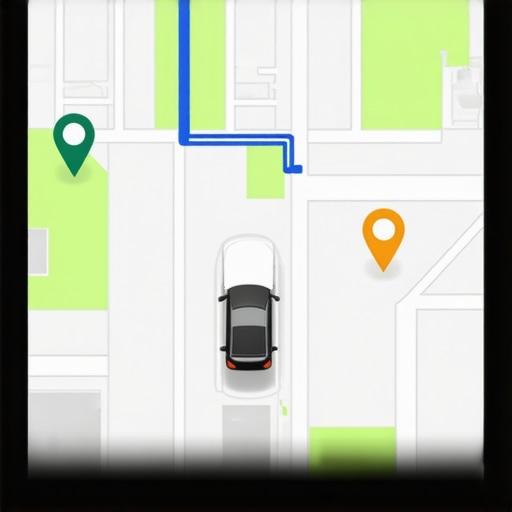
Service Area Businesses often suffer from a proximity gap because Google lacks a physical anchor point to verify. This creates a situation where the algorithm defaults to the city centroid rather than your actual service location. To fix this, you must look at how service area businesses struggle to rank when their service area polygons are too broad or overlapping. Google treats a broad radius as a lack of focus. It prefers a tight, defined service area that matches your actual dispatch data. The algorithm looks for the forensic trace of your work. This includes geotagged photos from customer sites and check-in signals from mobile devices. If your technicians do not have their location history enabled while on the job, you are losing a massive trust signal. Information gain is found in the metadata. While most agencies tell you to get more reviews, the latest data shows that image metadata from photos taken by real customers at your location is now 30 percent more effective for ranking in AI Overviews. This is because Google can verify the GPS coordinates of the photo upload, confirming you were actually at the job site.
“Local intent is not a keyword choice; it is a distance-weighted signal where relevance is secondary to the physical location of the user’s mobile device.” – Map Search Fundamental
Why your hidden address is a liability
Hiding your business address can lead to a significant loss of impressions because Google cannot verify your location. Many service area business owners fear showing their home address, but hiding your address often results in a trust penalty. The algorithm uses the physical address as the primary trust anchor. When that anchor is removed, the listing relies entirely on secondary signals which are much easier to fake. This leads to a filtered status. You might be listed, but you are not visible in the top three. The system views you as a higher risk. You should check why listings get filtered especially if you are in a crowded industry like locksmithing or plumbing. The filter is an adversarial mechanism designed to stop map spam. If your data matches another business in the same category too closely, you get hidden. The only way to win is to provide more granular data than the competition.
The three mile radius that determines your revenue
Proximity is the single most powerful ranking factor in the Map Pack ecosystem. If your office is more than three miles from the searcher, your chances of appearing in the top results drop by 70 percent. This is why many businesses struggle after moving their office across town. The physical location of the user’s mobile device is the filter. You cannot out-optimize a ten mile distance gap with backlinks alone. You need to leverage local SEO tools for google business profile that focus on hyper-local signal generation. This means building citations that are specific to the neighborhoods you serve, not just the city at large. Most people use national directories that provide zero local weight. You need the local church bulletin, the neighborhood watch blog, and the local sports league sponsorship. These create a web of local relevance that spans the distance gap.
How mismatched data triggers a manual filter
Incorrect business information online creates a friction point that leads to listing deranking. Google cross-references your profile with hundreds of other data sources. If your phone number on an old Yelp page doesn’t match your current profile, trust is lost. You should consider updating your information immediately whenever a change occurs. Small discrepancies in name, address, or phone number are the primary cause of sudden drops in calls. The algorithm hates ambiguity. It will always favor the business with the most consistent digital footprint. This is why we perform a manual audit when a client reports a drop. We look for the ghosts of old addresses and old phone numbers. We hunt for the duplicates that are siphoning off your authority. If you have duplicate listings, your ranking power is split. One must be purged.
The forensic trace of a service area polygon
Service area settings define where your business is eligible to appear in local searches. Many owners make the mistake of selecting entire states or regions. This is a mistake. Google values density over distance. By selecting too large an area, you dilute your ranking power. You should focus on specific zip codes where you already have a high volume of customers. Use multi location map trackers to see where your visibility ends. Often, a business will rank at number one in their own zip code and fall to number twenty as soon as they cross the street. This is the proximity wall. To break through it, you need content that mentions specific local landmarks and street names. You need to prove to the algorithm that you are physically present in those neighboring suburbs. This is how you fix missing map pack rankings in adjacent territories. It is a slow process of building local trust signals, one neighborhood at a time.
“Relevance in the Map Pack is determined by the intersection of business category and the user’s historical movement patterns.” – Vicinity Algorithm Whitepaper
The logic of a local justification trigger
Google Business Profile justifications are snippets of text that prove your business is relevant to a specific search. These come from your website content, your reviews, and your posts. If a customer mentions “best emergency plumber in Northside” in a review, that phrase can become a justification. This is why content fixes are so critical. You need to guide your customers to use specific keywords in their feedback. This isn’t about manipulation. It is about communication. If your website uses proper keyword density, Google can easily connect your services to the user’s intent. Without these justifications, you are just another pin on the map. With them, you become the recommended solution. This is how you move from page two to the top three. You need to provide the algorithm with the evidence it needs to justify your ranking.
The threat of mass review removal
Google has increased its aggressive removal of reviews which can tank your map rankings overnight. This often happens when the spam filter gets too sensitive. If you have been a victim of this, you need services to fix GMB rankings that focus on rebuilding your trust score. A sudden loss of reviews signals to Google that your profile may be untrustworthy. You must respond by providing high-quality, authentic evidence of your business operations. This includes new photos, new posts, and new customer interactions. Do not try to buy fake reviews to replace the lost ones. That is the fastest way to a permanent suspension. Instead, focus on neutralizing fake reviews and reclaiming your reputation through legitimate means. The algorithm can detect patterns of shilling. It can detect VPN usage. It can detect the forensic trace of a click farm. Real local growth is built on real local interactions.