
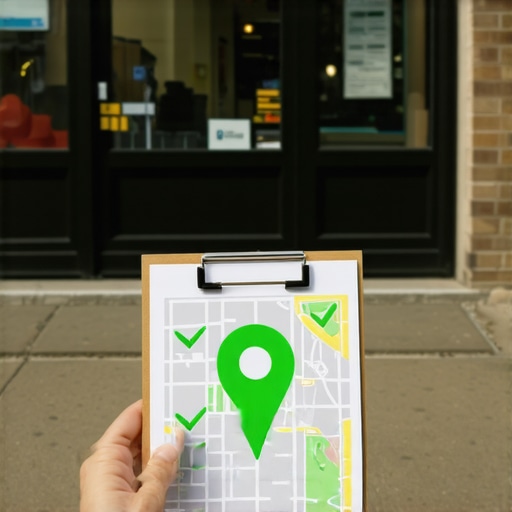
The Recovery Checklist for a Google Business Profile Penalty
The sidewalk smells like wet concrete and ozone after a summer storm. I am standing outside a small plumbing shop in a strip mall, staring at a storefront that looks exactly like the one in the digital photo, yet Google says it does not exist. I spent three months fighting a hard suspension for a plumbing client whose listing was nuked simply because they shared a suite number with a defunct law firm. Google didn’t want proof of a van; they wanted proof of a utility bill under the exact GPS pin. This is the reality of the hyper-local layer. It is a forensic world where a single mismatched digit in a suite number can trigger a total blackout of your revenue. When your map pin vanishes, you are not just losing a ranking. You are losing the proximity beacon that tells the neighborhood you are open for business. Recovery requires more than just a few edits. It requires a deep audit of the spatial data that defines your existence in the local algorithm.
The forensic reality of a vanished map pin
A Google Business Profile penalty occurs when the spatial database detects a conflict between your claimed location and the physical evidence gathered by the local algorithm. To fix this, you must analyze the NAP (Name, Address, Phone) consistency across every high-authority directory. The pin moved. It happens when the algorithm identifies a proximity conflict. You might be suffering from a sudden map pin disappearance due to a recent update. This is why you need a recovery roadmap for local sites that treats your profile like a crime scene. You need to look for the tiny glitches. Maybe it is the way your address is formatted on an old Yelp page. Maybe it is the fact that your phone number is listed as a mobile line instead of a landline in the underlying carrier database. These are the signals that trigger the proximity engine to downgrade your trust score. You must establish a baseline of truth before you can ask for reinstatement. This means scrubbing every mention of your business from the corners of the internet. You have to find the old, abandoned listings that are whispering lies to the Googlebot.
“Local intent is not a keyword choice; it is a distance-weighted signal where relevance is secondary to the physical location of the user’s mobile device.” – Map Search Fundamental
Why your physical address is a liability
The physical address of your business serves as the primary coordinate for the centroid math that determines your visibility in the 3-pack. If your office is located in a shared workspace or a virtual office, you are already at a massive disadvantage. Google values the permanence of a physical lease. I have seen listings drop simply because the street name was updated by the city and the business owner did not change their address on the profile immediately. You must realize that your address is a set of GPS coordinates. If those coordinates overlap with a high-risk category like personal injury law or locksmithing, you might be flagged as spam by association. You need to fix local proximity issues by proving your physical presence. Take a video. Start from the street. Show the number on the door. Show the desk. Show the business license. This is not about SEO anymore. This is about physical verification in a world of digital ghosts. The street photographer knows that the camera never lies, but the map often does. You have to force the map to align with the street. If you are a service area business, your liability is even higher because you lack a public pin. You must ensure your service area rankings are protected by a strict adherence to the 2-hour driving radius rule.
Local Authority Reading List
- Debugging your map drop
- The content overhaul for maps
- Fighting local spam on maps
- Improving ranking without leads
- Finding untapped local traffic
The three mile radius that determines your revenue
Proximity is the most volatile ranking factor in the local search ecosystem, creating a tight radius where your business is allowed to appear. Outside of this three-mile circle, your visibility drops off a cliff. This is the vicinity effect. You might be stuck on page two of maps because you are trying to rank in a neighborhood where you have no physical authority. To combat this, you need to build local relevance through your website content. Mention local landmarks. Talk about the specific intersections near your shop. If you find your high authority profile is still dropping, it is likely because a competitor has moved closer to the user centroid. You cannot move your building, but you can move your digital relevance. Use specific toolkits for moving your pin into the top 3 by optimizing for mobile search signals. When a user is walking down the street, their phone is constantly pinging towers. Google knows exactly where they are. If your business profile does not have a high enough trust score, Google will show a competitor who is 500 feet closer, even if their reviews are worse. This is the cold math of local search.
Cleaning the digital grime through citation audits
Citation cleanup services for local businesses focus on removing conflicting data from the Tier 2 and Tier 3 directories that influence Google’s trust engine. You need to identify every instance of an old phone number or a misspelled business name. These are the digital scars of a business model shift. If you have recently changed what you do, you need local seo services to repair ranking after switching business model. This is forensic work. You are looking for soft 404 errors and duplicate content issues that confuse the crawler. Use a clean up move for inaccurate business information to reset your baseline. Many agencies will try to sell you a citation blast. This is a mistake. You do not need more citations; you need fewer, better citations. You need to clean up spammy backlinks that are pointing to your listing. If the algorithm sees links from a plumbing site in Russia pointing to your local shop in Ohio, it smells a rat. You need to prune those links with the same precision you use to prune a hedge. Clean data is the foundation of local trust. Without it, your map pin is just a target for the next suspension wave.
“Proximity remains the single strongest ranking factor in local search, often overriding even high authority signals when a user is within a specific distance threshold.” – Vicinity Update Analysis
The math of review sentiment and velocity
Review velocity and the linguistic fingerprint of user-generated content are now more important than your total star rating for ranking. If you get twenty 5-star reviews in one day and then nothing for a month, the algorithm sees a red flag. This is what we call a review velocity spike. You need services to restore trust signals by generating a steady, organic flow of feedback. If you have been targeted by a competitor, you might need to neutralize fake reviews to reclaim your reputation. Google’s AI can now detect the difference between a real customer and a paid actor. It looks for the metadata in the photos they upload. Real photos taken at your location carry GPS tags. Stock photos do not. This is why you should always encourage customers to take a picture of the work. If you have a negative review spiral, it will tank your visibility faster than a manual penalty. You need a guide to review repair services that focuses on authenticity. Don’t buy reviews. It is a death sentence. Instead, focus on strategies that actually stick by engaging with your customers in the real world. The smell of laundry detergent on a customer’s shirt as they shake your hand is a signal that cannot be faked, but the digital equivalent is a geo-tagged photo of that handshake.
Toolkits that actually move the needle
Google Business Profile ranking software must provide real-time data on your proximity rankings across a grid of GPS coordinates. Most generic SEO tools are useless for the map pack because they only track rankings from a single point. You need a toolkit to rank higher in local map pack that shows you exactly where your visibility ends. Is it at the river? Is it at the highway? Knowing these boundaries allows you to target your local ads more effectively. When comparing a gmb ranking toolkit vs other local seo tools, look for the one that focuses on mobile search signals. You want a tool that helps you audit your categories and find the niche terms your competitors are missing. If you are an agency, you need google business profile seo tools for agencies that can handle multi-location management without the chaos. The right software doesn’t just show you numbers; it shows you the glitches in the data. It tells you when your opening hours history is creating an invisible penalty. It shows you the schema errors that are keeping you out of the rich results. Investing in a custom map pack toolkit is not an expense; it is the cost of entry for the local economy.
Restoring trust signals after a business model shift
A change in your business model often leads to a sudden drop in map rankings because the algorithm no longer understands your core category relevance. If you were a cafe and you are now a bakery, you have to do more than just change the category name. You have to update your entire digital footprint. You need seo services to fix gmb profile inconsistencies. This includes your opening hours history. If you used to be open 24 hours and now you close at 5 PM, Google might still be serving your old data to users. This leads to high bounce rates and a loss of trust. You need to stabilize your position by providing a consistent narrative across all platforms. Use local anchor text audits to ensure your website is supporting your new category. If you have moved, you must follow the checklist for changing your business address to avoid a suspension. The algorithm is suspicious of change. It likes patterns. When you break a pattern, you have to build a new one quickly. This is where restoring local authority becomes a full-time job. You are convincing a machine that you are still the same reliable business, even if your sign has changed.
The technical fix for soft 404 errors
Soft 404 errors and duplicate content issues on your local landing pages create a signal of low quality that can suppress your map rankings. A soft 404 happens when a page tells the user it doesn’t exist but tells the server that it is fine. This confuses the crawler. You need services to fix soft 404 issues specifically for local SEO. Each location page should have unique, grounded content. Do not use a template where only the city name is changed. That is the quickest way to get filtered out of the results. You need a content overhaul that includes local images and specific service descriptions. If you have multiple offices, you need a ranking move for multi-location SEO that emphasizes the individual identity of each shop. Prune your old locations carefully. Do not just delete them; redirect them. This preserves the link equity you have built over the years. The digital world is full of clutter. Your job is to be the cleaner. Use custom business schema to tell Google exactly who you are and where you are. This is the final step in the recovery checklist. When the technical foundation is solid and the spatial data is clean, the map pin will return. The sidewalk may still be wet, but the customers will find their way to your door again.