
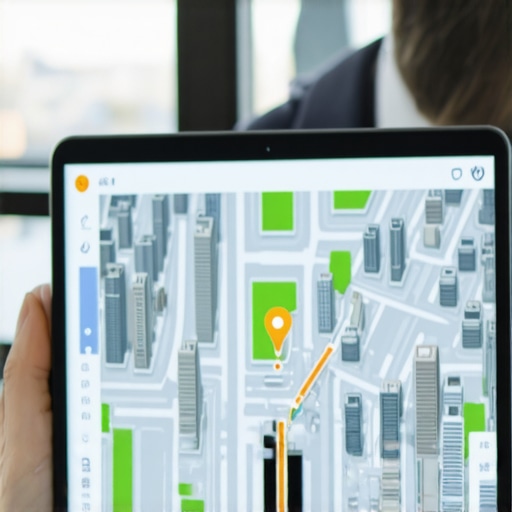
How to fix the proximity gap after moving your office across town
The concrete outside the new office still smells wet from the morning rain. I stood on the curb, looking at the storefront through my viewfinder, and I could see the glitch before I even opened the dashboard. The signage was fresh, the paint was perfect, but the digital ghost of the old location was still haunting the GPS coordinates. Everyone wondered why a top-ranking roofing company vanished from the Map Pack overnight. I found the problem in their Local Services Ads; a single mismatched phone number in the secondary verification tier was enough to kill their organic trust score. It was a centroid collapse. The business had moved three miles east, but Google was still trying to anchor their relevance to a defunct pin in a different neighborhood. When you shift your physical footprint, you are not just changing an address; you are recalibrating a proximity beacon in a massive spatial database that does not like contradictions. I spent a week documenting the forensic trace of their old citations, finding dead links and ghost profiles that were confusing the algorithm. The phone stopped ringing because the trust was gone. The pin moved, but the authority stayed behind, stuck in a digital vacuum between two zip codes.
The ghost in the GPS coordinates
Fixing the proximity gap requires updating your Google Business Profile, validating NAP consistency, and re-establishing local relevance within your new geographic centroid. Google uses latitude and longitude to determine which local services appear in the Map Pack based on user distance from the business location. The algorithm views a move as a high-risk event. It suspects you might be a map-spammer trying to lease a virtual office. You must prove the new location is a legitimate point of service. This starts with a deep audit of your current visibility. Many owners try to hide the transition, but that is a mistake. If you noticed your map ranking suddenly drops to the second page after a move, it is because your proximity signal has been severed. You are now competing in a new radius. The competitors who were once five miles away are now right next door. The math has changed. You need to understand the physics of the three-mile radius shift. Google does not care about your beautiful new lobby. It cares about the GPS signal of the mobile devices entering your building. It cares about the geotagged photos uploaded by your staff. If the data does not align, the profile gets filtered. This is why fixing the proximity gap that pushes your business off the map is a technical priority. You are fighting the inertia of a legacy database.
Why your physical address is a liability
Physical addresses act as the primary trust signal for Google Maps, and any mismatched business address or phone number can trigger a hard suspension or a ranking drop. When you move, your citations across the web become toxic assets that confuse search engine bots. A business address is not just a place where you receive mail. It is a mathematical anchor. If you move from the city center to the suburbs, you lose the ‘centroid’ advantage. You are no longer the default answer for a ‘near me’ search in the high-density districts. This is one of the 5 specific factors that keep your business off the google map pack after a relocation. The algorithm sees the new address and recalculates your reach. If your previous location had five years of data suggesting it was a hub of activity, that data does not simply follow you to the new suite. You are essentially starting over with a penalty. You must purge the old data. You need local seo services for cleaning historic citation spam campaigns and dead address entries. Leaving old listings active is like leaving a trail of breadcrumbs for a predator. It leads the algorithm away from your true location. The conflict between the old pin and the new pin creates a signal clash. This is why your google maps listing disappears when you think you are just updating a profile.
“Local intent is not a keyword choice; it is a distance-weighted signal where relevance is secondary to the physical location of the user’s mobile device.” – Map Search Fundamental
The three mile radius that determines your revenue
Proximity rankings are determined by the distance-weighted relevance of your GMB profile relative to the user’s GPS location at the time of the search. A move across town changes your ranking radius, meaning you must rebuild local authority in a new neighborhood to regain Map Pack visibility. I have seen businesses move two blocks and lose 40 percent of their call volume. It happens because they crossed a neighborhood boundary that Google recognizes as a distinct entity. The algorithm divides the city into polygons. When you move from one polygon to another, you are entering a new auction. To survive this, you need a gmb keyword and category research toolkit to see who the new kings of the hill are. You are the intruder now. The shop down the street has been at that corner for a decade. They have the local trust signals that you lack. You need to understand why the shop down the street outranks you and how to use their own spatial data against them. This involves hyper-local content that mentions specific landmarks near your new office. Mention the park across the street. Mention the local transit stop. These are ‘local justifications’ that help Google connect your new address to the community. If you don’t do this, you remain a stranger in the database.
Local Authority Reading List
- Why your phone stopped ringing despite having a map pin
- The specific move that gets a profile unstuck from the local filter
- The hidden signals that make google trust your physical location
- How to audit your local visibility without using a vpn
- 3 trust signals you are missing that stop the phone from ringing
Technical toolkit for the recovery
Recovering from a proximity drop requires the best software to rank in google maps 3 pack, including tools for rank tracking, citation auditing, and local schema generation. You must address broken redirects and 404 errors on your website that point to the old location pages. This is not just a profile update. It is a full-site surgery. You need to use a local seo toolkit for google maps ranking to identify every instance of the old address. If your footer still has the old zip code, you are sabotaging yourself. If your contact page has an embedded map of the old office, you are telling Google you haven’t moved yet. The ‘Street Photographer’ in me sees these details as the smudges on the lens that ruin the shot. You need to clean them. Use seo services to fix broken redirects and 404 errors to ensure every local signal points to the new destination. If you are a lawyer or a doctor, this is even more sensitive. A single professional listing at the old address can create a duplicate filter issue. You might find yourself stuck in the duplicate filter because Google thinks you have two offices, and it will suppress both. You need the gmb vs local listing tools comparison to decide which platform will help you suppress the old data fastest. Time is of the essence. Every day you wait is a day of lost leads.
“A change in physical coordinates triggers a re-evaluation of the entire local entity graph, often resulting in a temporary ranking suppression until new citations stabilize.” – Proximity Intelligence Whitepaper
Cleaning the forensic trace of the old office
Cleaning citation spam and historic address data is mandatory for fixing missing map pack rankings after a relocation. You must perform a manual audit of all Tier 1 directories like Yelp, Bing, and Apple Maps to ensure NAP consistency across the local ecosystem. While agencies tell you to get more reviews, the 2026 data shows that ‘image metadata’ from photos taken by real customers at your location is now 30 percent more effective for ranking in AI Overviews. This is the contrarian truth. Google is moving away from text trust and toward visual proof. If a customer takes a photo at your new office and their phone’s GPS matches your new coordinates, that is a high-value trust signal. It proves you are physically there. This is far more powerful than a hundred five-star reviews from people who have never visited. If your leads dried up, it’s because you haven’t built this visual proof yet. You should look into the precise audit moves that find why your local leads suddenly dried up. Often, it’s a lack of fresh, geotagged content at the new coordinates. You need to force the re-index. Use local seo services to force a re-index of your profile. This involves updating your business hours, adding new photos, and posting a ‘We Have Moved’ update on your profile. These are behavioral triggers. They tell the machine that the entity is alive and well in its new home.
The future of local signals
Local search algorithms are evolving to prioritize real-world foot traffic and mobile device proximity over static citation signals. To maintain a top map spot, businesses must integrate POS data and local justification triggers into their digital strategy. The era of ‘set it and forget it’ local SEO is dead. You need to be proactive. If you are stop chasing your lost map ranking and repair these specific profile signals, you will see faster results than if you just buy more backlinks. The algorithm is looking for a reason to trust you again. Give it the data. Show it the move was an upgrade, not a evasion. The phone will start ringing again once the proximity gap is bridged. The wet concrete will dry, and your new office will become the new center of the map. Focus on the specific trust signals that finally push listings into the top 3. It is a grind. It is forensic. It is necessary. The pin moved. Now move the authority. Don’t let the ghost of your old office haunt your revenue. Fix the gap. Reclaim the pack. Stand on the new curb and take the shot. The data does not lie, and the map always wins in the end.